

Chef Kitty’s Food Truck Goes Traveling on November 27. What changes when the crew takes the camera?
iQIYI’s Chef Kitty’s Food Truck Goes Traveling premieres on November 27 at 10 a.m. Beijing time. Taotaosu, Nuonuomi and their friends take a camera on the road and start making travel videos. Weather, unfamiliar routes and small disagreements over who should do what can all set a story in motion. [1] [2]

The characters get to tell the travel story
Travel and food lend themselves to a series of attractive stops. The new Chef Kitty story gives those stops a point of view. Its synopsis has the friends filming what they discover and collecting their experiences in a magical journal. Who holds the camera and what catches that character’s attention can change how a young viewer understands the same incident. One character can jump to an explanation while another notices the detail that eventually makes it all fit. [1]
The journal also gives the story a reason to come back to something that happened earlier. Someone in a hurry may barely remember the rule they agreed to at the start of a trip. Looking back at the day lets the group connect that rule with the clue they missed and the help another friend offered. That turns the souvenir into something the characters can use on their next outing.
Familiar personalities have consequences on the road
The platform’s synopsis gives the group several ways to get out of step. Taotaosu wants everything done well and can end up taking over. Nuonuomi’s inventions sometimes go into use before they have been fully tried out. Qiqitu is quick to act, and food can distract Matuan from an agreement. Put all four on a shared itinerary and those familiar traits start shaping how the others have to respond. [1]
Imagine a scene in which the group is dividing up jobs before it sets off. An impatient character can interrupt the plan while another finishes explaining it. Hearing the interruption makes it easier for a child to understand why the first character later heads in the wrong direction. Even a simple “Wait” can carry the urgency of stopping a friend or the excitement of having noticed a clue. Children’s animation dubbing can make those reactions distinct while keeping the exchanges easy to follow.
A new place should sound different
The surroundings can give children a sense of where the crew has landed. In a hypothetical outdoor cooking scene, a tent flap could draw attention to the wind before the sound of a pan takes over. A short gap then gives a character room to say what they need the others to do. The order of those sounds helps the viewer connect the action to the line.
There is also a difference between explaining a dish to the camera and turning to ask a friend for help. The introduction might come out as a complete thought. The request can be short, with the next voice picking up the exchange. Giving those two kinds of speech distinct rhythms helps young listeners follow the changing focus.
How to test an ensemble scene
Beijing CMV Studio handled dubbing and mixing for Chef Kitty’s Food Truck Goes Traveling. For a similar animation, a useful test is a short scene where three or four characters respond to a minor mishap. Listen for the moment each character takes initiative, reacts or gives someone else room to speak.
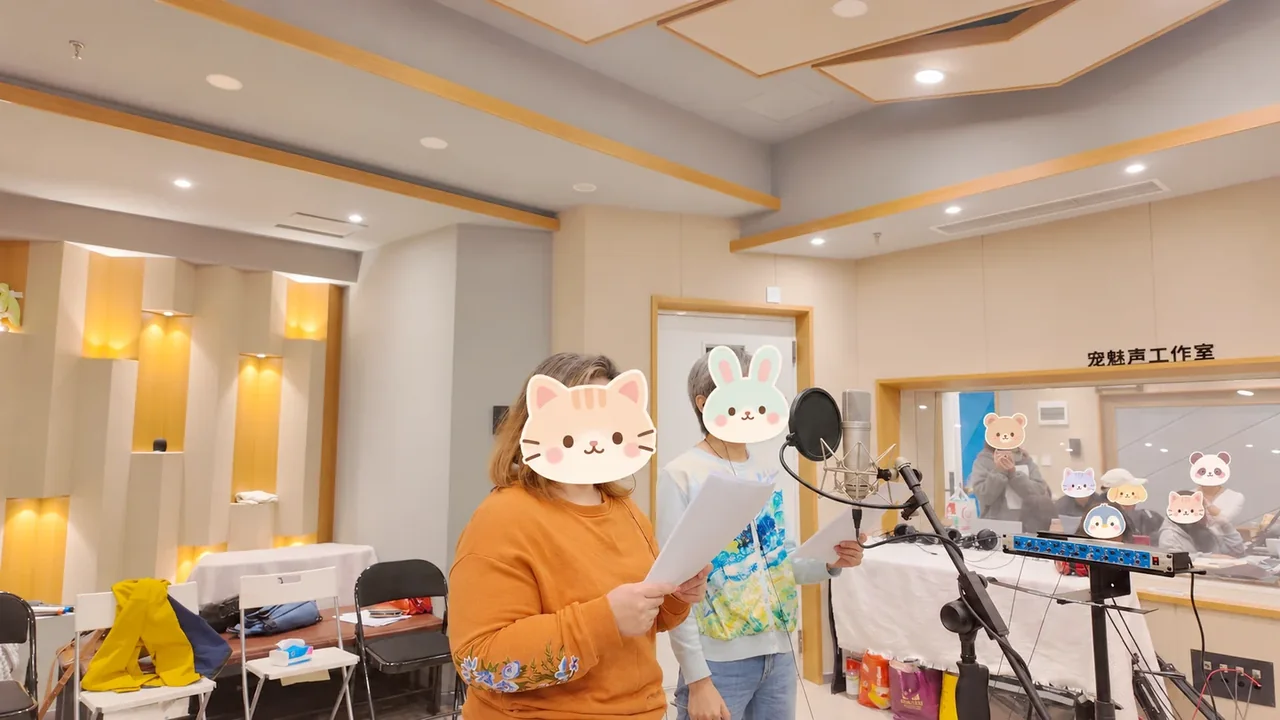
Compare a dialogue-only recording with the version that includes music and effects. Ask someone unfamiliar with the characters who understood the problem first. Their answer can help the team decide whether to adjust the voice, the timing or the sound around it.
If the show will be recorded in batches, keep the approved exchange as part of the character’s reference. Mark what an interruption sounds like and how the character acknowledges a mistake. That gives later sessions a consistent place to start.
Related work and services
- Watch the sequel on iQIYI
- Watch the original Chef Kitty’s Food Truck on iQIYI
- Professional Voiceover Services